From Supermarket Bar to Real Couverture: A Beginner's Guide to Making the Move
Wondering whether it’s time to move from supermarket chocolate to professional couverture? This guide is here to help you decide. We’ll look at what’s changed on the supermarket shelf, what couverture chocolate actually is, what it really costs, and how to get started, so you can judge whether the time is right for your business to make the switch.
How has the chocolate market changed and what do your customers expect now?
If you’re currently buying mass-produced, shop-bought chocolate bars to melt into your bakes or create your own moulded bars, you’re in good company. Plenty of small bakeries and home businesses start there. What has shifted in recent years is the chocolate itself, and what your customers are willing to pay for.
Cocoa prices have climbed to record levels, peaking above $12,000 per tonne in late 2024 and staying volatile through 2025 and 2026. To hold their shelf prices, brands across the supermarket aisle have quietly reformulated: cocoa content has fallen, and cocoa butter has been partly or wholly swapped for cheaper vegetable fats.
Consumers, meanwhile, haven’t stopped buying chocolate. They’re simply buying it a little less often and spending more when they do; reaching for single origin bars, luxury boxes and craft chocolate that feels like a mini celebration. The Waitrose Food & Drink Report pinpoints it: shoppers are “buying less but better, rather than trading down.” NielsenIQ’s 2026 outlook tracks the same pattern: super-premium chocolate is one of the categories still growing despite the price pressure, and 61% of chocolate buyers now see premium chocolate as an affordable luxury.
That is exactly where independent chocolatiers, bakers and patissiers have the advantage. But, as your work gets more ambitious and your customers pay more, the chocolate has to keep up.
What is supermarket chocolate actually made of now?
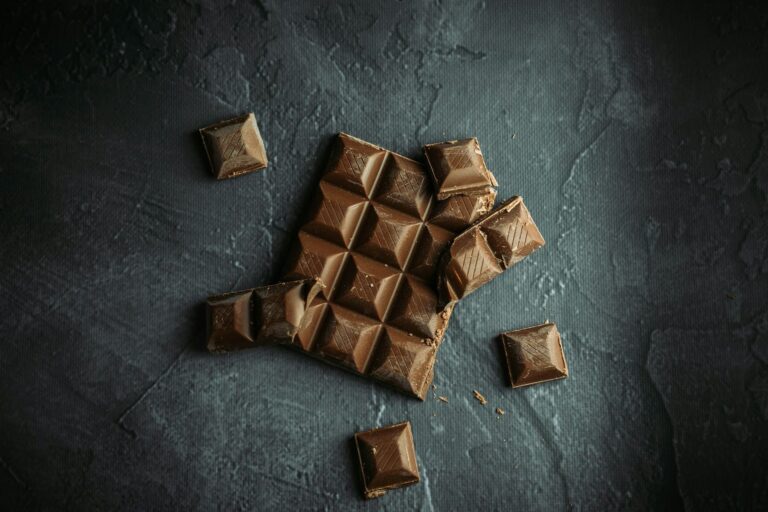
Under UK and EU rules, plain milk chocolate needs to be at least 25% total cocoa solids, and dark chocolate at least 35%. There’s a lower-cocoa category called “family milk chocolate,” and there’s an allowance for up to 5% vegetable fat in addition to cocoa butter. Anything below the chocolate thresholds—or made mostly with vegetable fat instead of cocoa butter—must be labelled as chocolate-flavoured coating, or compound.
Many popular own-label and branded bars now sit at the lower end of those thresholds. And a growing share of the “chocolate” sold in seasonal boxes, coated biscuits, filled bars and cheaper novelty ranges is now compound, made with vegetable fat rather than cocoa butter.
That works perfectly fine when a bar is grated over a cake or stirred into a brownie batter. It starts to hold you back the moment you want to enrobe, mould, make ganache, decorate or scale a batch because compound and low-cocoa-butter chocolate behave very differently to real couverture.
Read this BBC article to find out more about why some well-known and beloved confections can no longer be called chocolate.
What is couverture chocolate?
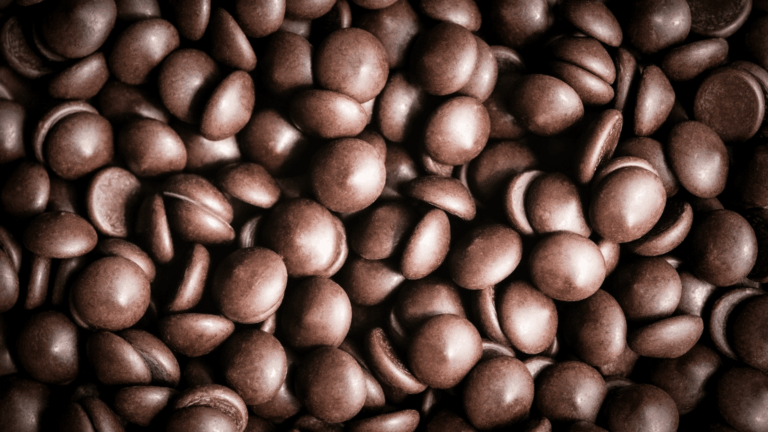
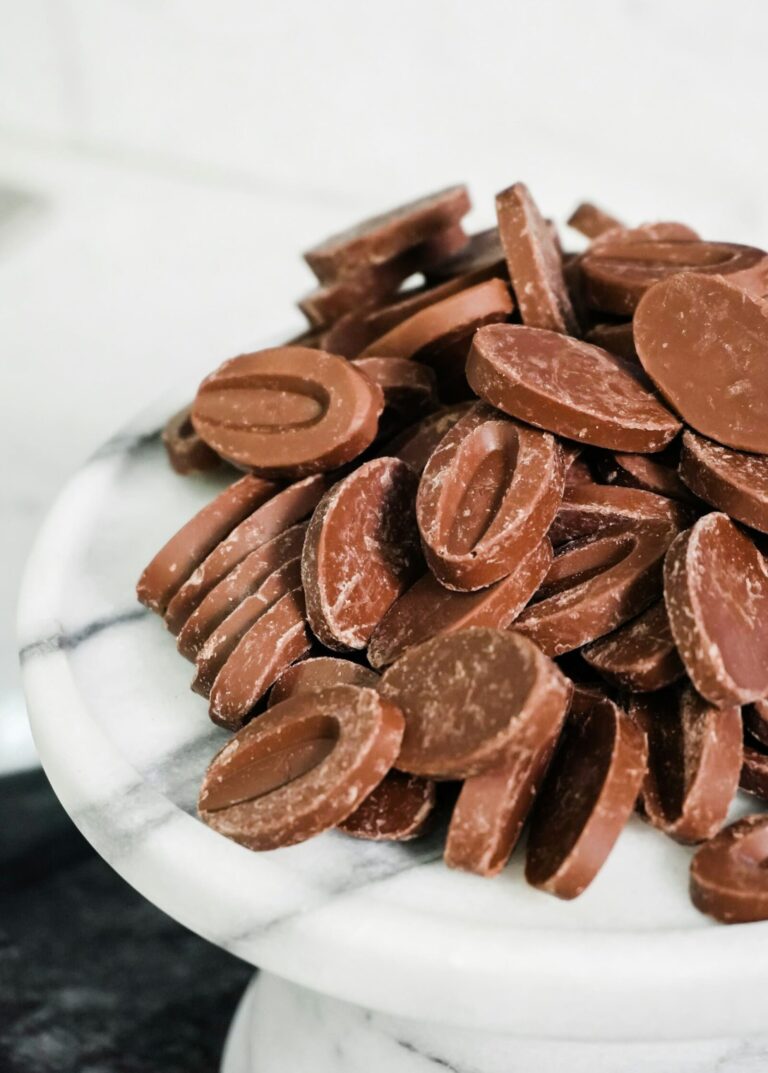
Couverture is real chocolate made with cocoa butter as its only added fat, at a higher cocoa butter content than eating chocolate; typically 31–40% or more. It’s ground finer, so the finished piece feels smoother in the mouth, and it’s formulated to melt, temper and set consistently.
There are three families. Dark couverture is cocoa mass, cocoa butter and sugar, running from around 55% up to 80%+ cocoa solids. Milk couverture adds milk powder and usually sits between 30% and 45%. White couverture has no cocoa solids at all, it’s cocoa butter, milk and sugar, and behaves differently again.
For a deeper look at how different couvertures behave when you melt them, read our beginners’ guide to Chocolate Viscosity.
Is couverture easier to work with than supermarket chocolate?
A well-tempered couverture is an easy-to-use, co-operative material. Consistent viscosity means a predictable coating thickness on enrobed pieces. Fluid grades release cleanly from moulds and hold fine detail in logos, textured shells, figure moulds, etc. Ganache emulsifies more reliably because you’re working with real cocoa butter rather than a swap. The finished product has a perfect snap, glossy shine and a clean break.
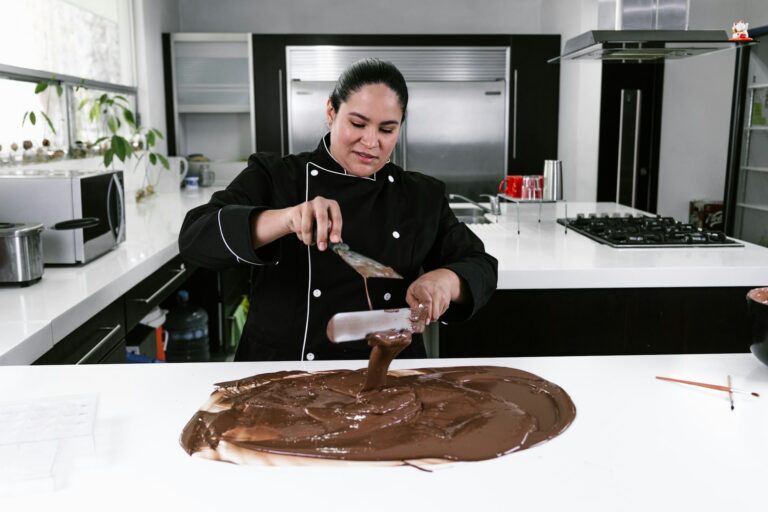
The one new skill you may need is tempering, and it’s simple enough to learn once you understand the principles. It’s the process of bringing melted chocolate through a specific temperature curve so that the cocoa butter crystallises in the stable form that gives you snap, gloss and the right release from a mould. New to it? Start with our Introduction to Chocolate & Tempering, then work through Tempering Explained for the science and a walk-through of the three main tempering methods.
Once you’ve done it once with real couverture, the moulded piece that pops out clean, glossy and snappy tends to makes all the effort worthwhile.
Is couverture worth the extra cost?
Real couverture costs more per kilo than a supermarket bar. But it starts to make sense financially once you see the difference in the end product, and how much time and effort you save.
Couverture that’s been melted and tempered can be re-tempered and reused. Trimmings from enrobing, mould scrapings, the tail-end of a batch—all of it goes back into the bowl, temper it again, and it’s ready to work. A well-run chocolate workflow runs at close to zero chocolate waste. And for any waste you do create, our blog on a no-waste Christmas for chocolatiers has some fantastically economical ideas for the bits of leftover chocolate you might once have written off, such as bark, mendiants and other high-margin, limited edition lines.
Compared to the shelf price of a supermarket bar, the maths makes sense. You use what you need, you rework what you don’t, and the finished piece—a limited edition truffle collection, a bag of chocolate shards, a filled bar in your own branded packaging—commands a price a shop-bought bar simply can’t. The per-kilo raw material is a fraction of what the finished piece retails for.
Why does provenance matter to your customers?
Some couvertures come with a provenance story you can put in a product description, on your packaging or in a blog or social post. Humans love storytelling, and the idea of a rich history and culture behind the chocolate their eating is naturally compelling. But provenance isn’t just about marketing.
Named-origin ranges tell you which country or region—often which cooperative or estate—the beans came from. Thanks to advances in traceability, in some cases you can even pinpoint the location of the beans being grown down to the nearest square kilometer. Each cocoa-growing country has its own methods, history and unique flavour characteristics thanks to the soil, climate, native flora, and other crops being grown nearby.
Sustainability programmes carry their own certifications: Callebaut’s Cocoa Horizons work, Valrhona’s B Corporation accreditation and long-standing farmer partnerships, Favorich’s Ghana-sourced single-origin range with published traceability, Veliche’s Grown Respectfully programme. Rainforest Alliance and Fairtrade marks add a layer of assurance a shopper recognises instantly.
Consumers paying premium prices increasingly want to know where the cocoa came from and who benefited. Being able to answer that—with a country of origin and a named programme rather than a vague claim—is a real advantage over anything generic and mass-produced. It’s also the foundation of the sustainability angle: less waste in your kitchen, longer shelf life on better-emulsified pieces, and cocoa that supports the farmers who grew it.
When is it time to switch to couverture?
Not every project needs couverture. If you’re baking for family and friends, a good supermarket bar is fine. But these are the moments when the step-up starts to pay for itself:
- You’re taking custom orders, wedding work or event commissions.
- You want to enrobe, mould or decorate rather than just melt-and-pour.
- You’re selling at farm shops, delis or craft markets.
- Your customers ask where your chocolate comes from.
- You’re scaling up batch sizes and need consistency across production.
- You want to build a brand story that stands next to premium supermarket bars, not underneath them.
How do you get started with couverture?
You don’t have to overhaul everything on day one. Pick one dark couverture and one milk, in a manageable quantity (1-2.5kg). Practice tempering with each until the set is glossy and the snap is clean. Build one signature product around them — a bonbon, a bark, a moulded bar — before rolling the change through the rest of your range. Keep your supermarket stash for melt-and-mix bakes where it still earns its place, and let the couverture take on the pieces where it shows.
Our Ultimate Chocolatier Resource List has the tools, moulds and reference materials worth reaching for as you make the move from supermarket chocolate to professional couverture chocolate.